

Research
Welcome to the research page of the Centre of Forensic Interviewing. Our mission is to advance the field of forensic interviewing through cutting-edge studies, evidence-based practices, and collaborative innovation.
Here, you'll find our latest research projects, published works, and insights into the methodologies shaping the future of forensic interviewing. We are dedicated to supporting practitioners, scholars, and policymakers with resources that empower ethical, effective, and informed practices in forensic interviewing.
Explore our work and join us in driving meaningful progress in this critical field.
From criminal interrogations to investigative interviews: A bibliometric study
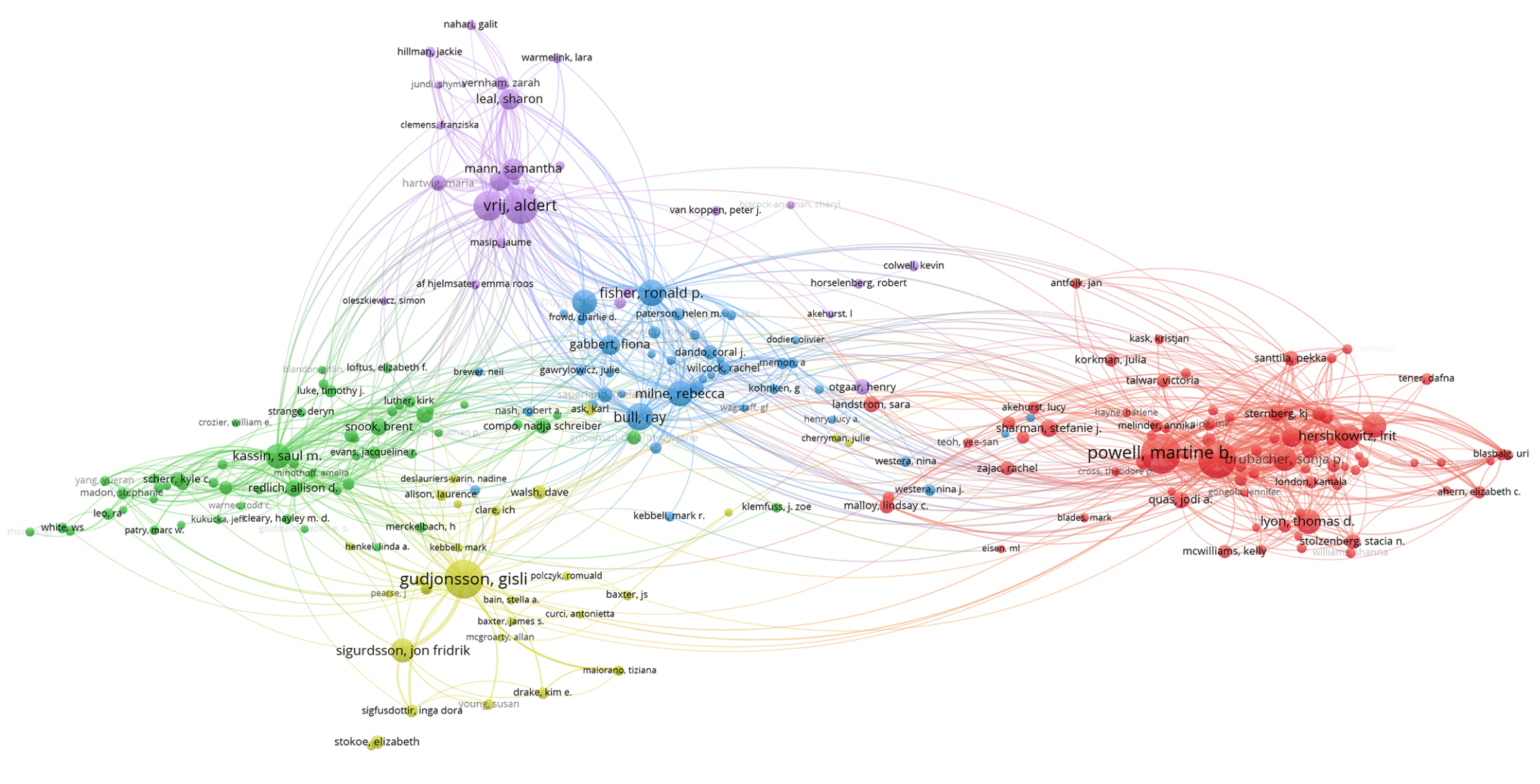
(Denault & Talwar, 2023)
This bibliometric study, by Vincent Denault and Victoria Talwar, explores the citation network of criminal interrogations and investigative interviews, highlighting the relationships between influential works in this field. Specifically, the figure illustrates how often authors reference each other, forming a web of interconnectivity within the research landscape. This analysis includes key contributors from around the world, such as members of the Centre of Forensic Interviewing (CoFI) like Professor Becky Milne, Dr Ray Bull, and Dr Mark Kebbell, among many others. This network reflects the collaborative and interdisciplinary nature of the research, driving advancements in evidence-based investigative practices. It helps practitioners and researchers identify foundational studies and emerging themes while fostering better communication between academia and law enforcement professionals.
A co-ordinated global initiative to enhance interview practice
A co-ordinated global initiative to enhance interview practice
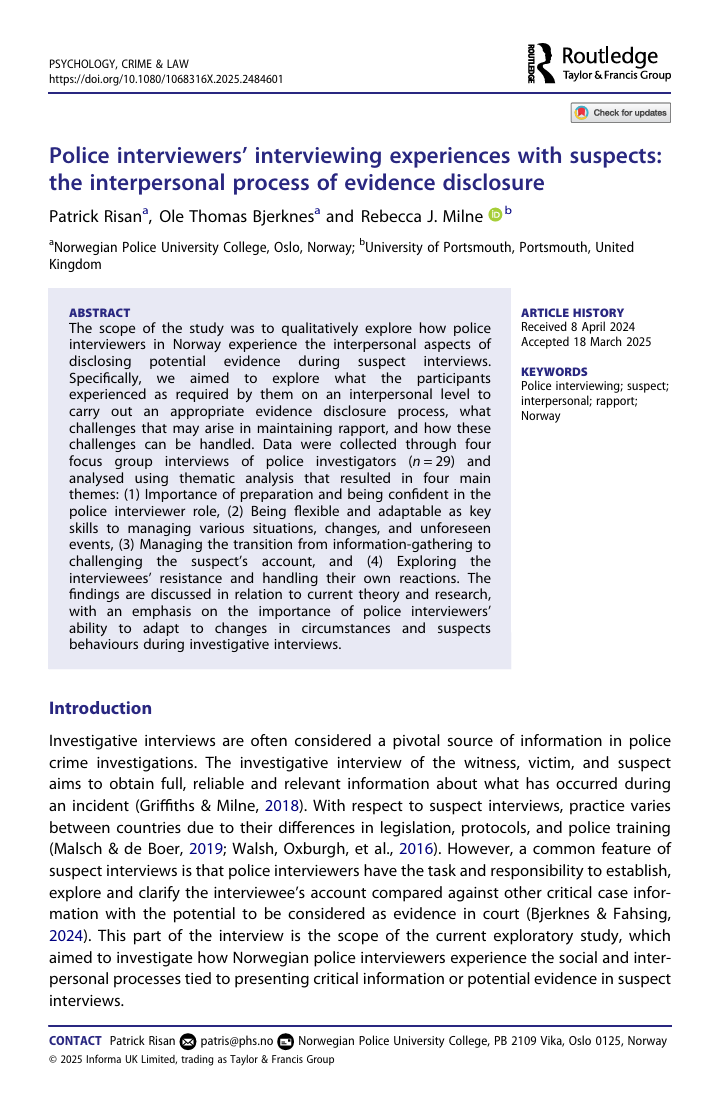
Police interviewers’ interviewing experiences with suspects: The interpersonal process of evidence disclosure
Police Interviewers’ Interviewing Experiences with Suspects
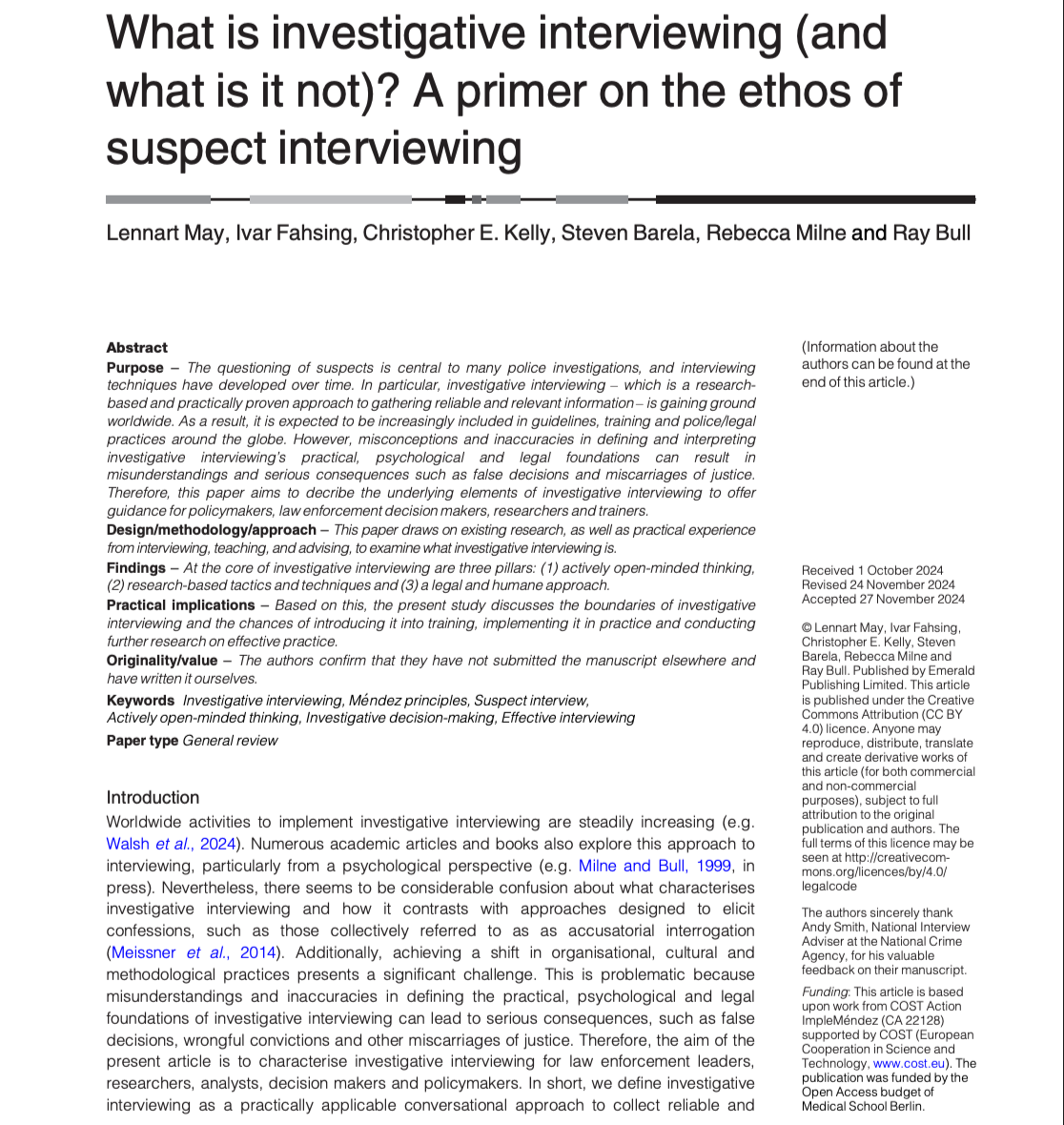
What is investigative interviewing (and what is it not)? A primer on the ethos of suspect interviewing
What is Investigative Interviewing (and What is it Not)?
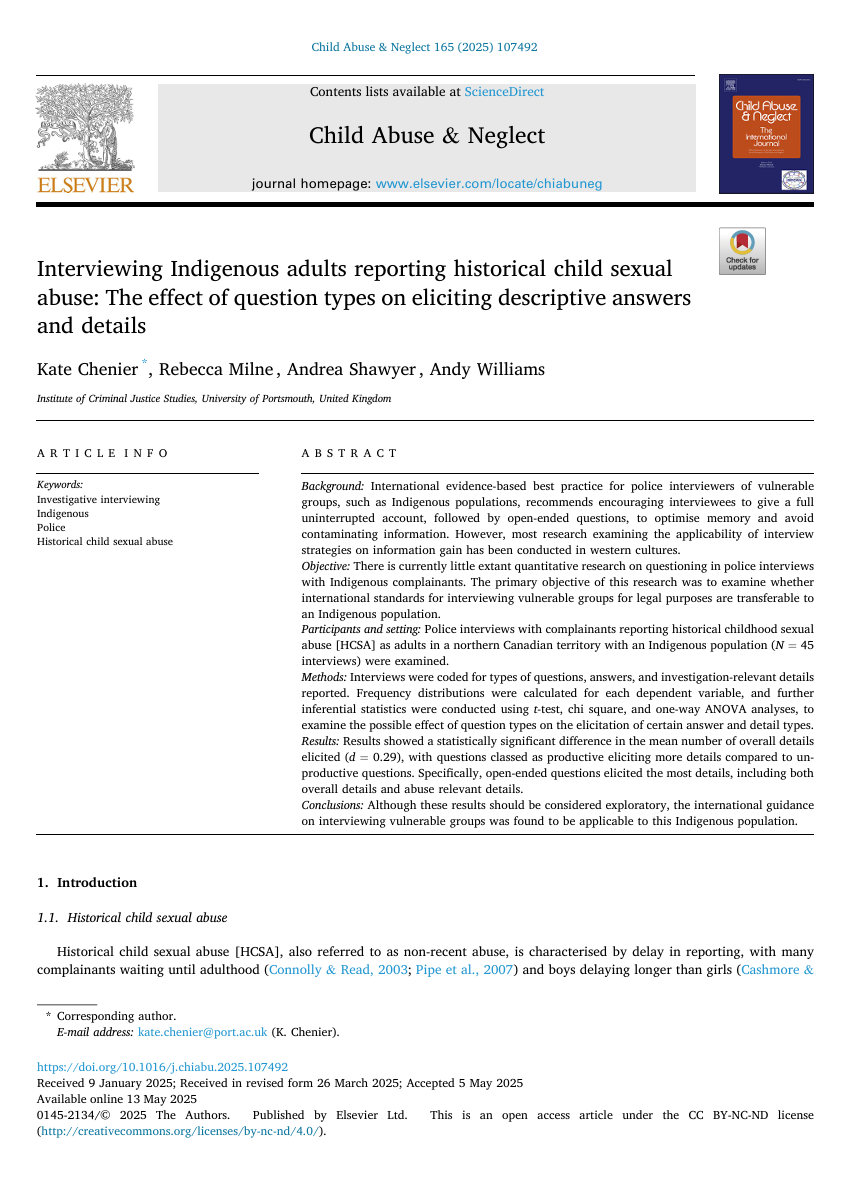
Interviewing Indigenous adults reporting historical child sexual abuse: The effect of question types on eliciting descriptive answers and details
Eliciting Details in CSA Interviews with Indigenous Adults
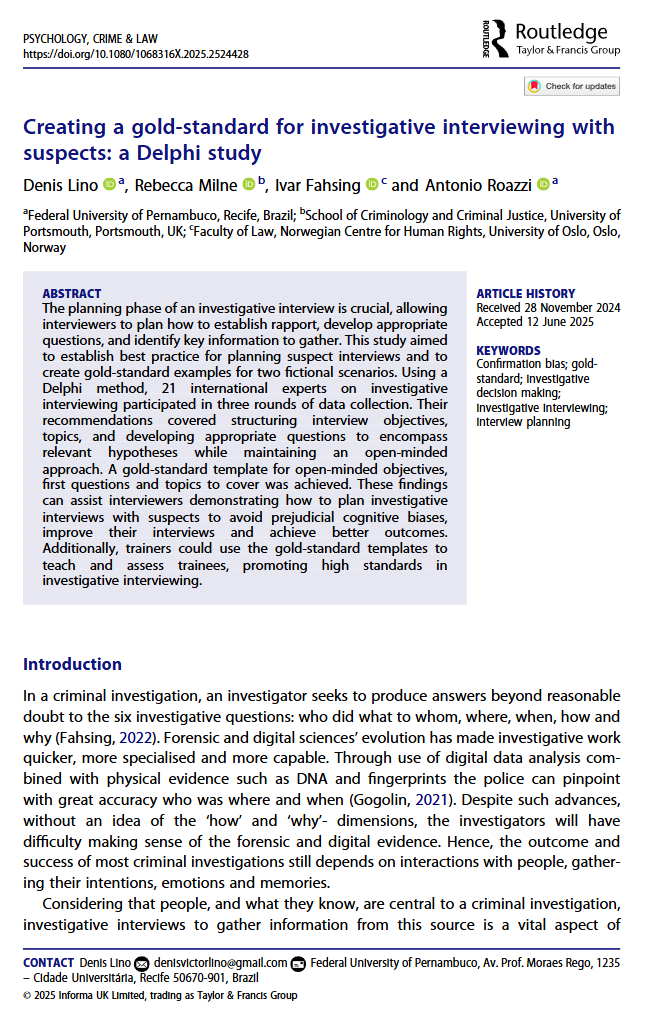
Creating a gold-standard for investigative interviewing with suspects: A Delphi study
Creating a Gold-Standard for Investigative Interviewing with Suspects
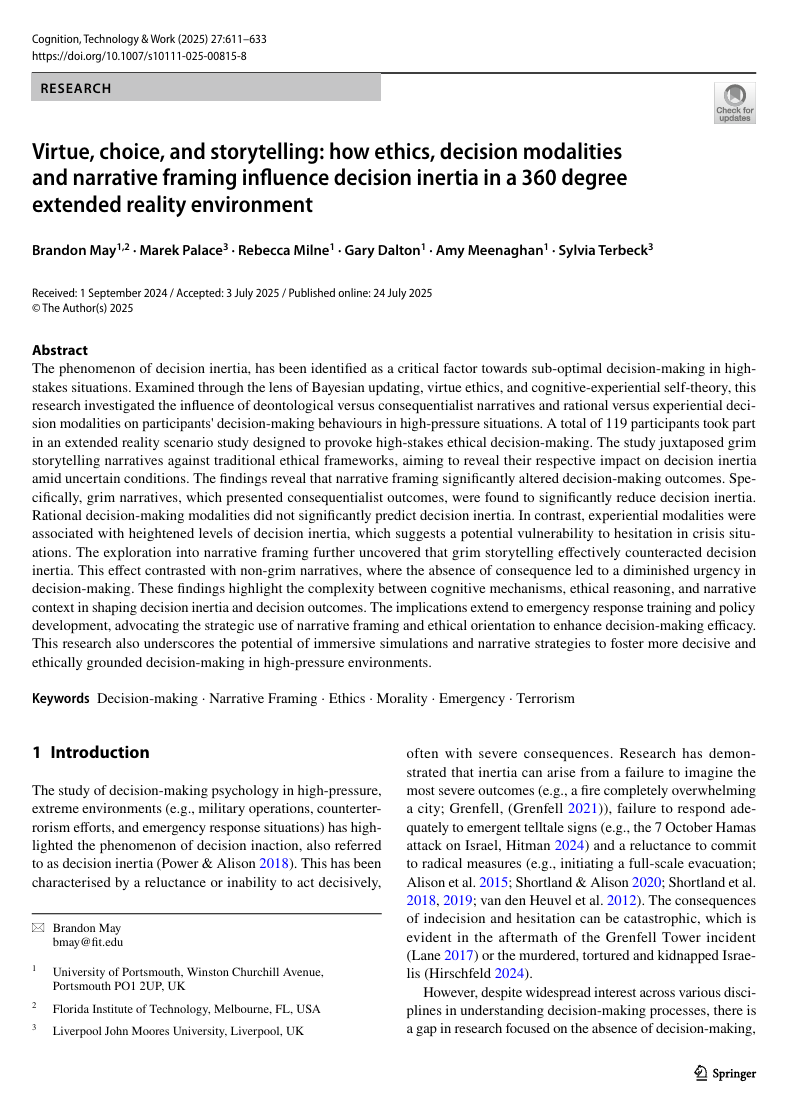
Virtue, choice, and storytelling: How ethics, decision modalities and narrative framing influence decision inertia in a 360 degree extended reality environment
Decision Inertia in 360° XR: Ethics and Narrative Framing
An exploratory thematic analysis of the decision challenges faced by emergency responders during the 2017 Manchester Arena attacks
Emergency Decision-Making During the Manchester Arena Attacks
Does escaping a war zone feel worse than being there? War and coping by Ukrainian civilians in Ukraine and Poland
Does escaping a war zone feel worse than being there?
From criminal interrogations to investigative interviews: A bibliometric study
From criminal interrogations to investigative interviews: A bibliometric study
The time in between a case of ‘wrongful’ and ‘rightful’ conviction in the UK: Miscarriages of justice and the contribution of psychology to reforming the police investigative process
Contribution of Psychology to Reforming the Investigative Process
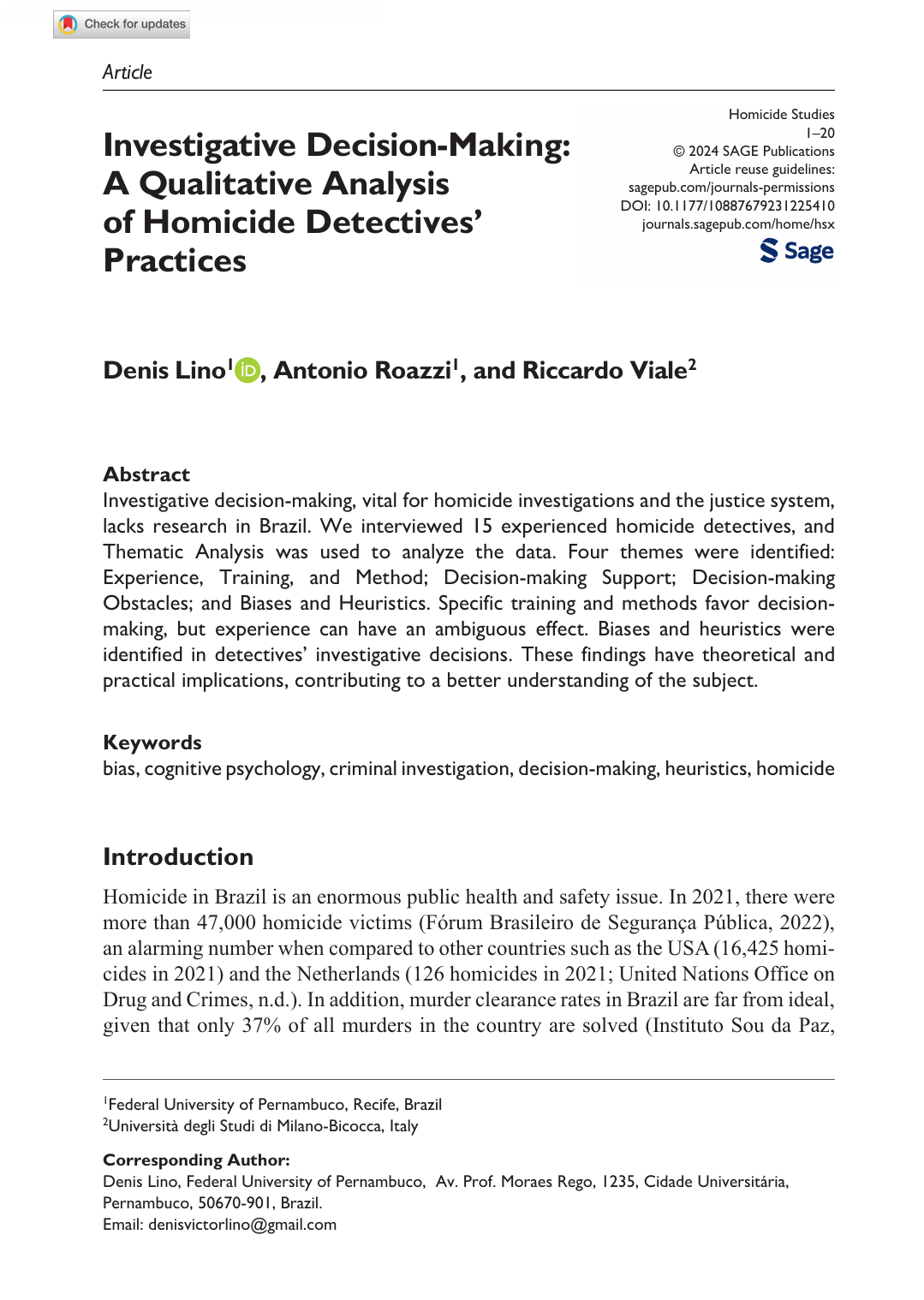
Investigative Decision-Making: A Qualitative Analysis of Homicide Detectives’ Practices
Investigative Decision-Making
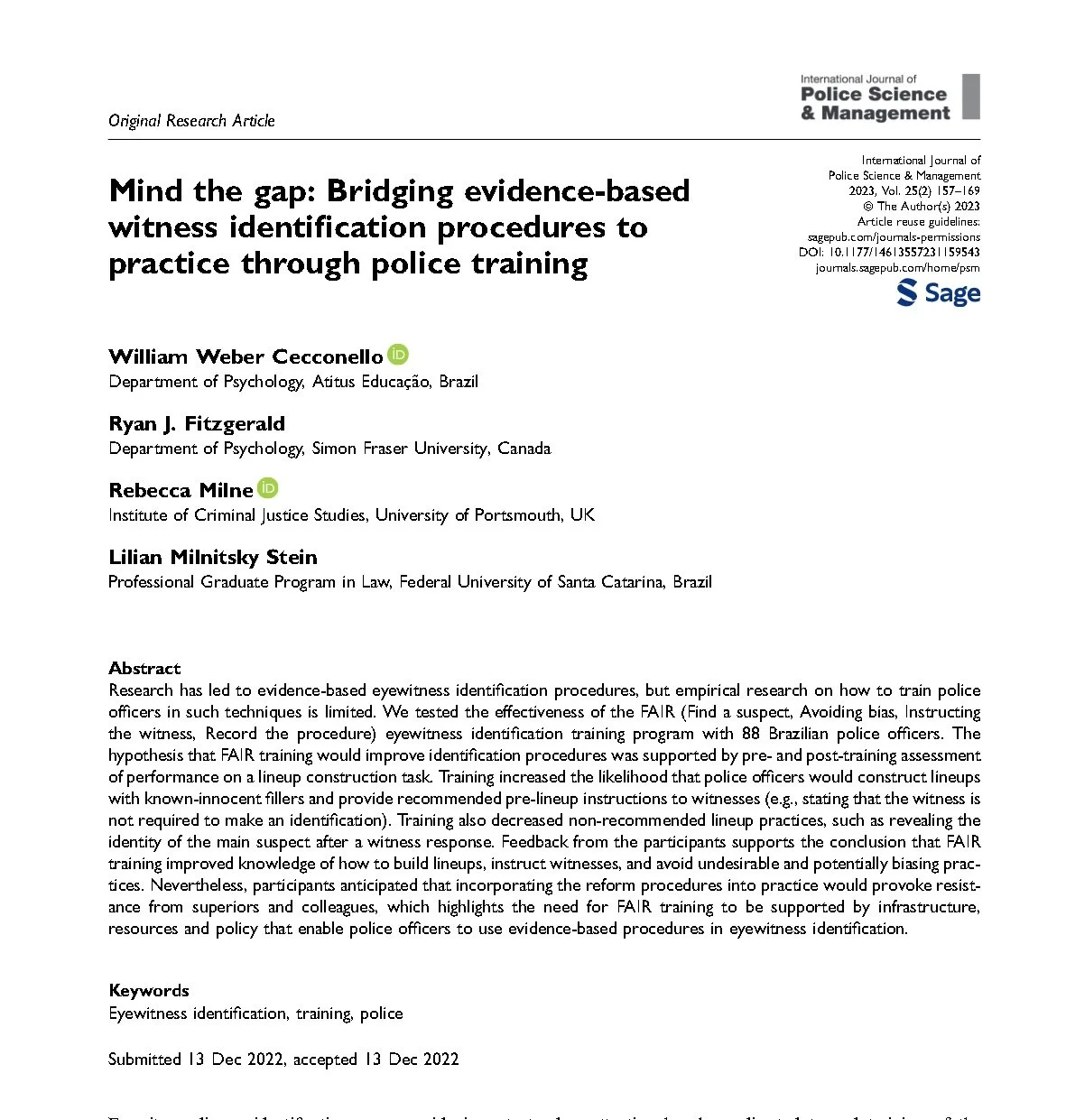
Mind the gap: Bridging evidence-based witness identification procedures to practice through police training
Witness Identification Procedures in Practice